Automated microscopy for fission track dating — serving science since 1979
About Autoscan

Taking your fission track lab to the next level

An Australian scientific instrument manufacturer with a world-first to its name — and a client list spanning 29 countries.

1979
First FTD equipment built
1984
Incorporated in Victoria
1995
On the web
29
Countries with installations
C-tick
EMC accredited

Who we are

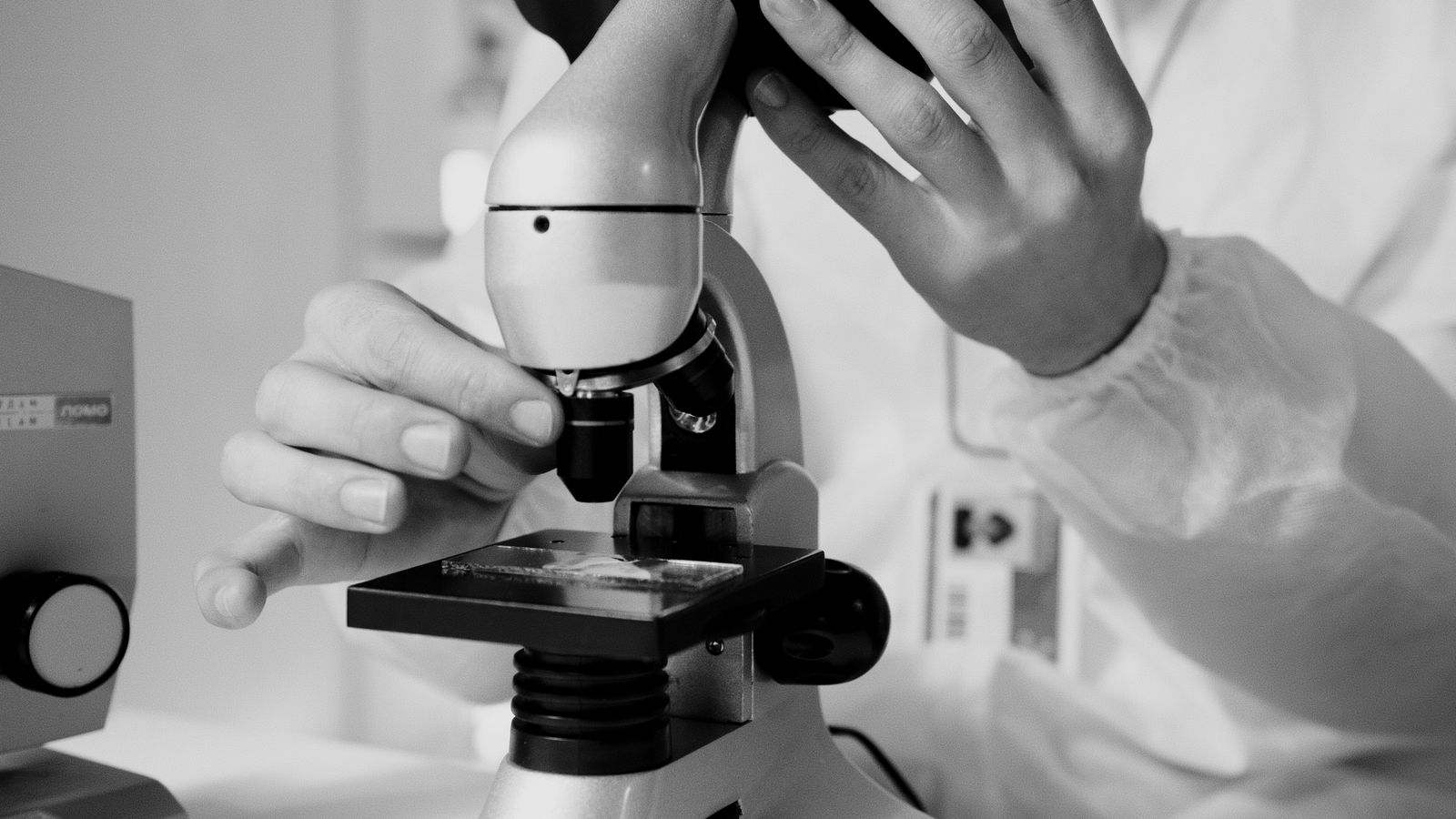
Autoscan Systems Pty. Ltd. is an Australian scientific instrument manufacturer that built its first equipment for the geological technique of fission track dating in 1979, and was incorporated under its current name in 1984. Since then we have become the world's leading manufacturer and supplier of automated microscope systems. Our equipment takes the tedium out of optical microscopy — and is known and respected as the "Rolls-Royce" of microscope systems, a reputation our after-sales service shares.

We offer complete solutions built on special-purpose, high-precision, PC-controlled and motorised Carl Zeiss optical laboratory microscopes — hardware, software, computer and calibration from a single supplier.

From robotic stages to nanometre focus

We originally built our own Autoscan stages in-house: three-axis, DC-servo-driven robotic platforms that replaced the standard microscope stage, with sub-micron movement in X, Y and Z — to our knowledge the only stage in the world at the time with integral motorised focus. (For reference, a human hair is 50–80 microns across.) A three-axis joystick and an electronic controller completed the system.

Technology has moved on, and so have we. The Zeiss AxioImager microscopes our software now controls have focus accuracy measured in nanometres, so today we integrate Zeiss-supplied stages — the standard stepper-motor stage, entirely adequate for most laboratories, or an optional Piezo-motor stage with our patented six-sample slide holder system.

The world first

In its original application, our equipment helped operators compare corresponding points in two mirror-imaged, randomly aligned images at different heights on a microscope slide — a task so difficult that our Trakscan package was credited with saving 80% of an experienced operator's time, and won worldwide acceptance.

The latest and most exciting development came from a three-year collaborative research project with the fission track dating group at the University of Melbourne, headed by Professor A.J.W. Gleadow: software that counts fission tracks fully automatically — on the apatite grain and on the mica detector for the EDM technique, and supporting the emerging LA-ICP-MS workflow. It is a world-first achievement following decades of failed attempts by other groups, made possible by modern computing power and high-resolution digital cameras — and it is now patented. An entire tedious, time-consuming stage of the FTD technique has simply been bypassed.

Recognition

Our products have been featured in publications in the UK, India, the USA and Japan. As early as 1986 we won the coveted QANTAS/AUSTRADE award for export excellence, with a series of further export award wins and nominations since. We remain proud to contribute meaningfully to Australia's export effort.

What makes it work

  • A product that answers the market's needs — one our own staff are convinced by.
  • Dedicated, knowledgeable people providing the superior customer service our clients so often remark upon.
  • Tangible, recession-proof value — time savings and tedium avoidance translate directly to lower labour costs and better output.
  • Absolute commitment to customers — a business is only as good as its customers perceive it to be.
Community

Four decades on the conference circuit

We stay close to our markets by attending — and usually sponsoring — the international fission track and thermochronology meetings: door prizes, delegate satchels, student sponsorships and a stand showing our latest products.

1986–1998

Cambridge ICOG · Besançon FTD 6 · Canberra ICOG 7 · Philadelphia FTD 7

2000–2008

Lorne FTD 9 · Cádiz ECTC · Amsterdam FTD 10 · Bremen ECTC · Pisa workshop · Anchorage FTD 11 (sponsor)

2010–2018

Glasgow FTD 12 · Guilin FTD 13 · Chamonix FTD 14 · Quedlinburg FTD 16

Also

Microscopy by the Bay (Geelong) · ARPS Hobart · ICNTS 23 Beijing (delivered address) · Microscience London

Come and see for yourself.

A demonstration in Brighton, Victoria — or a conversation about your lab's next system, wherever you are.