At 1000× magnification, every footstep in the corridor shakes your image. Three proven ways to keep it still — from commercial dynamic tables to a granite slab on inner tubes.
Most laboratory floors move a surprising amount. FTD work takes place at 1000× — the maximum useful magnification for visible light — and that magnifies small vibrations along with the fission tracks, destroying the information automated counting depends on. Isolation is not optional; happily, it need not be expensive either.
The Halcyon range of dynamic anti-vibration tables incorporates high-technology devices that adapt moment-by-moment to variations in external vibration — the premium option for problem floors. (Not supplied by Autoscan.)
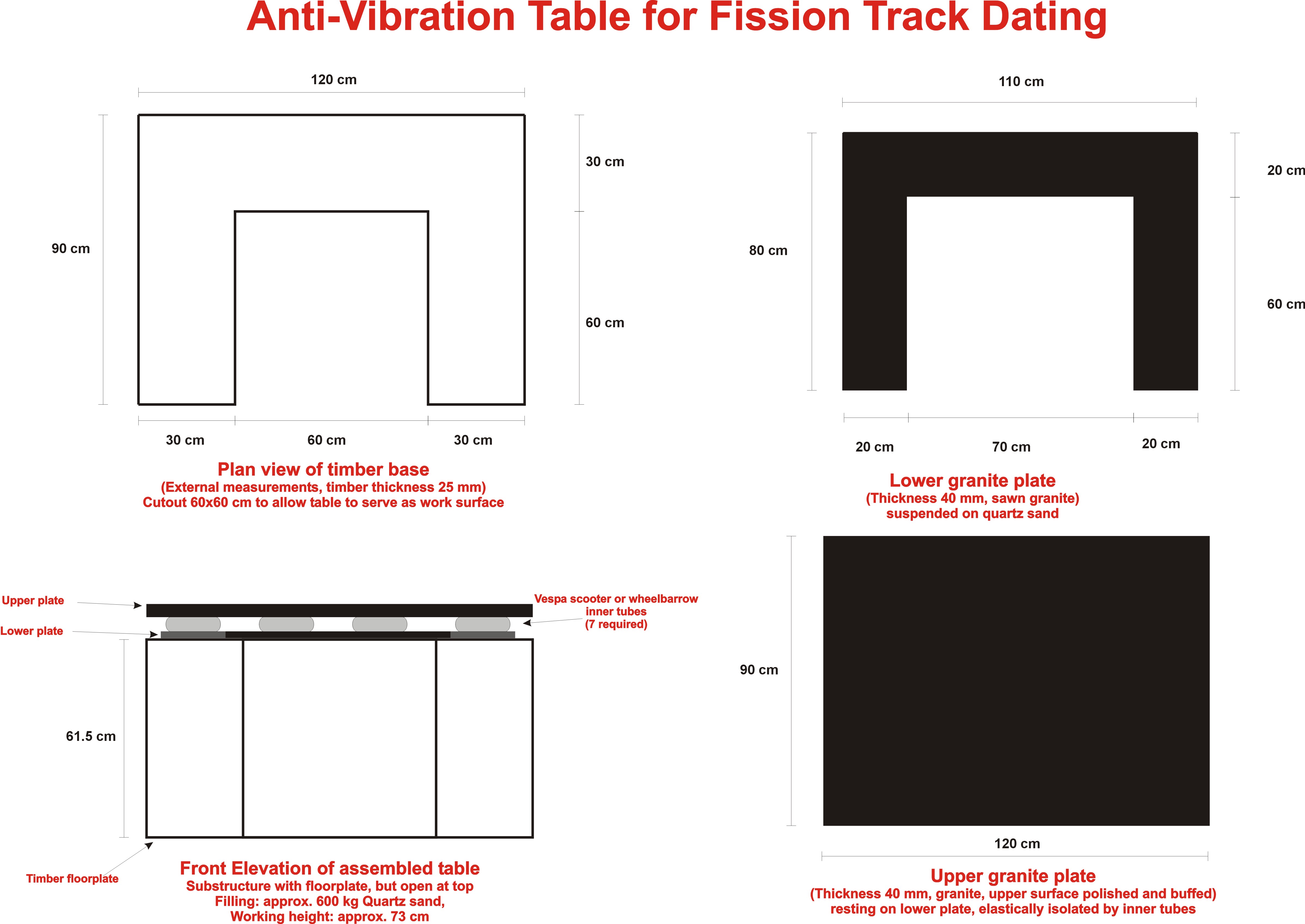
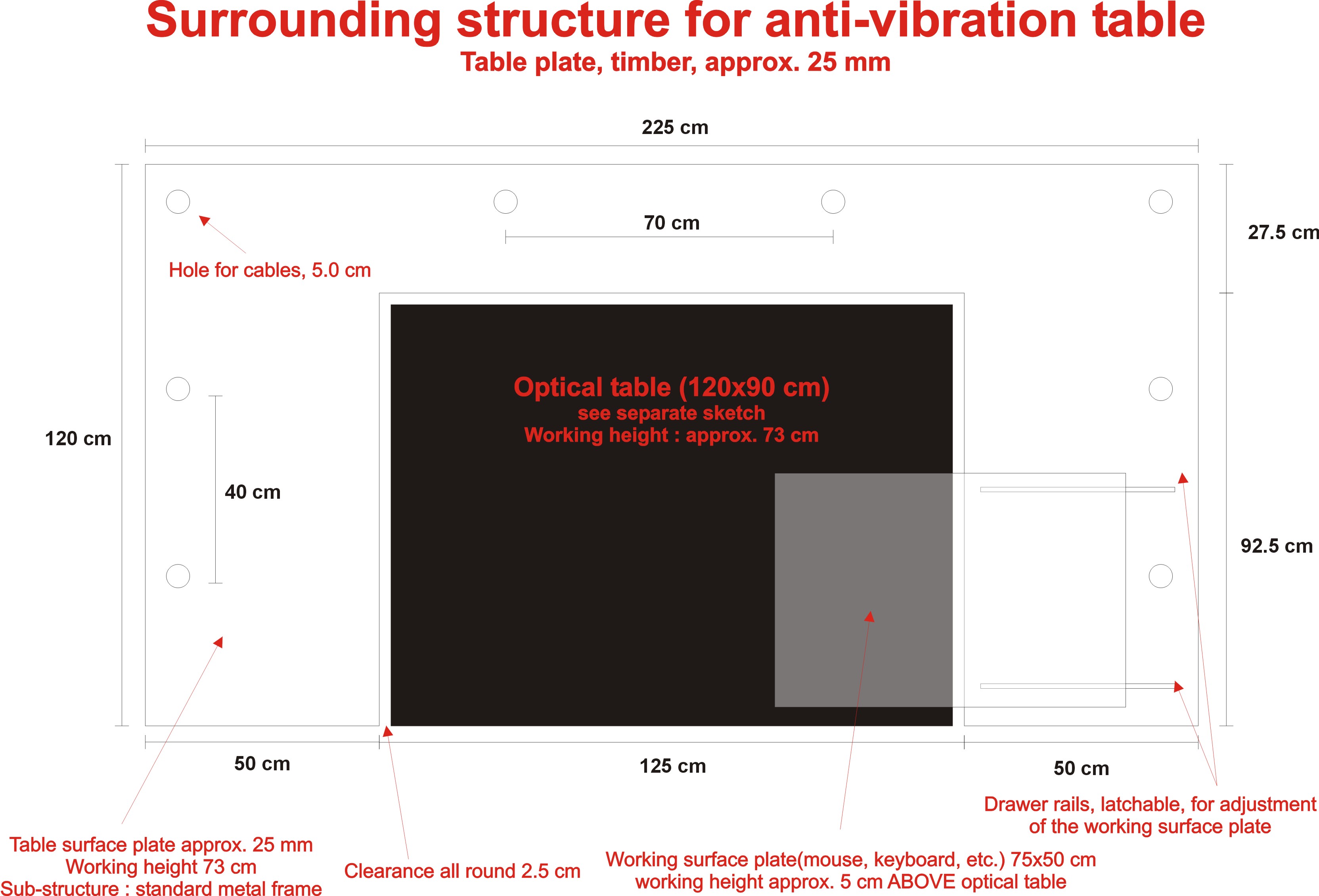
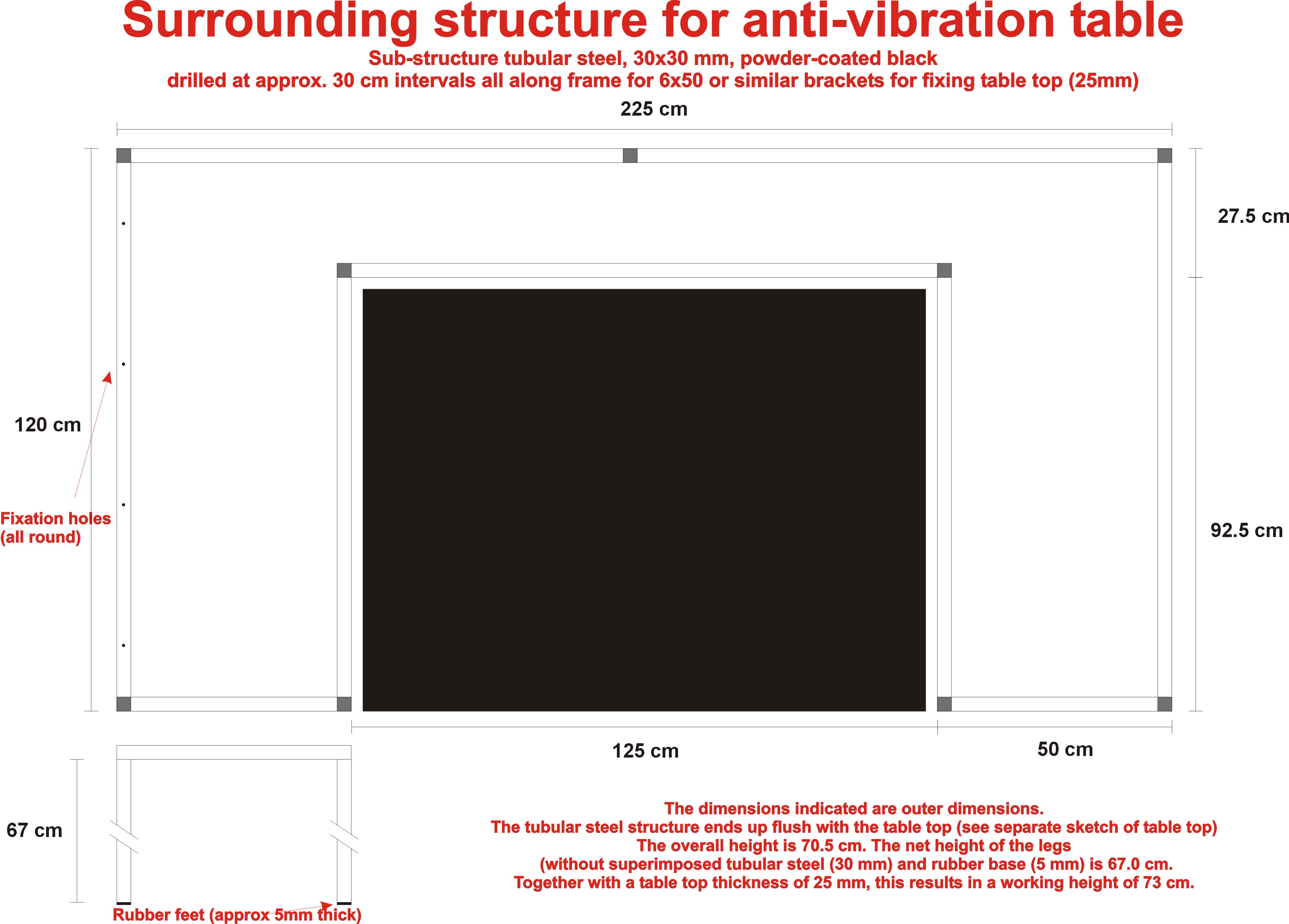
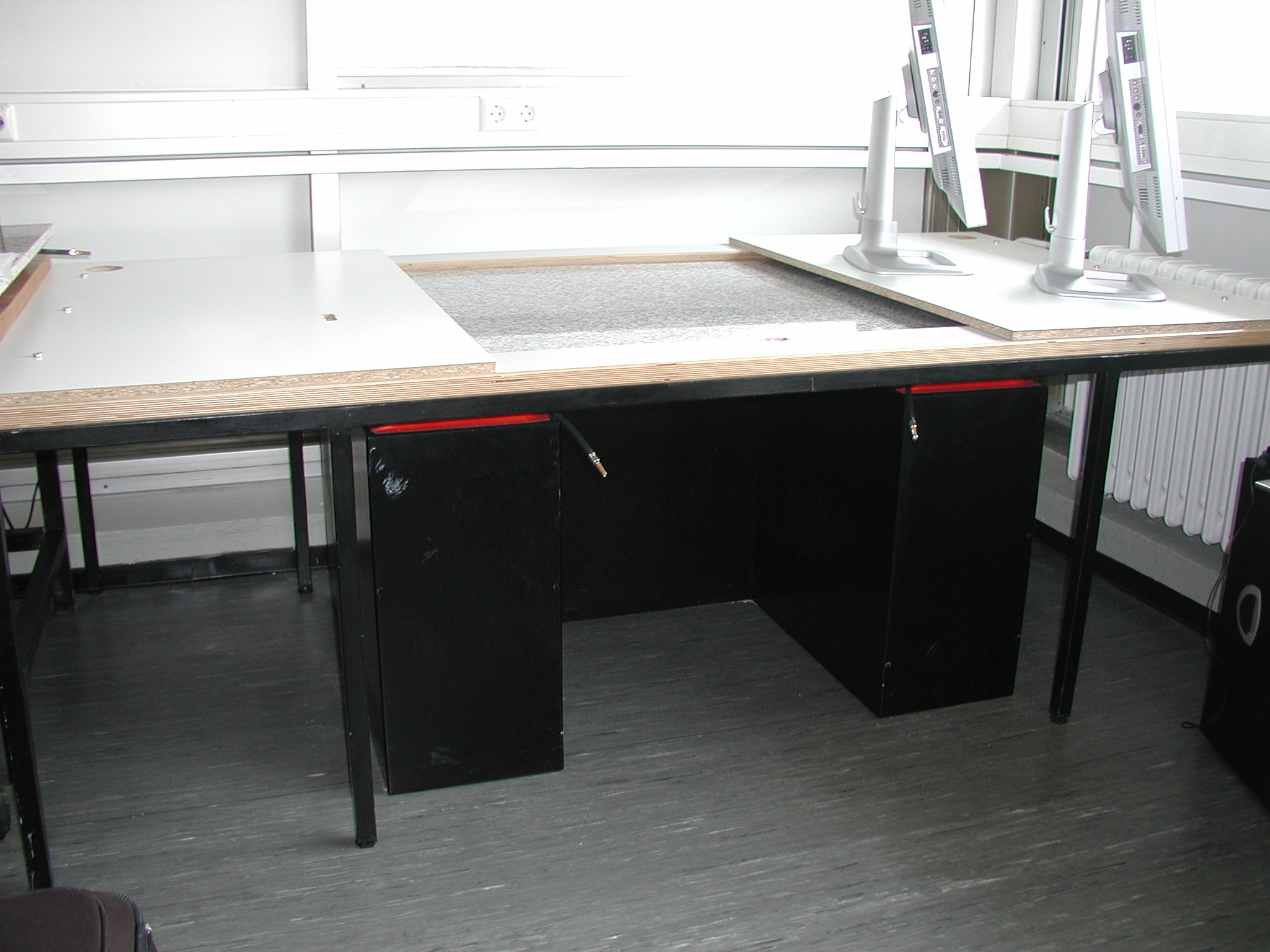
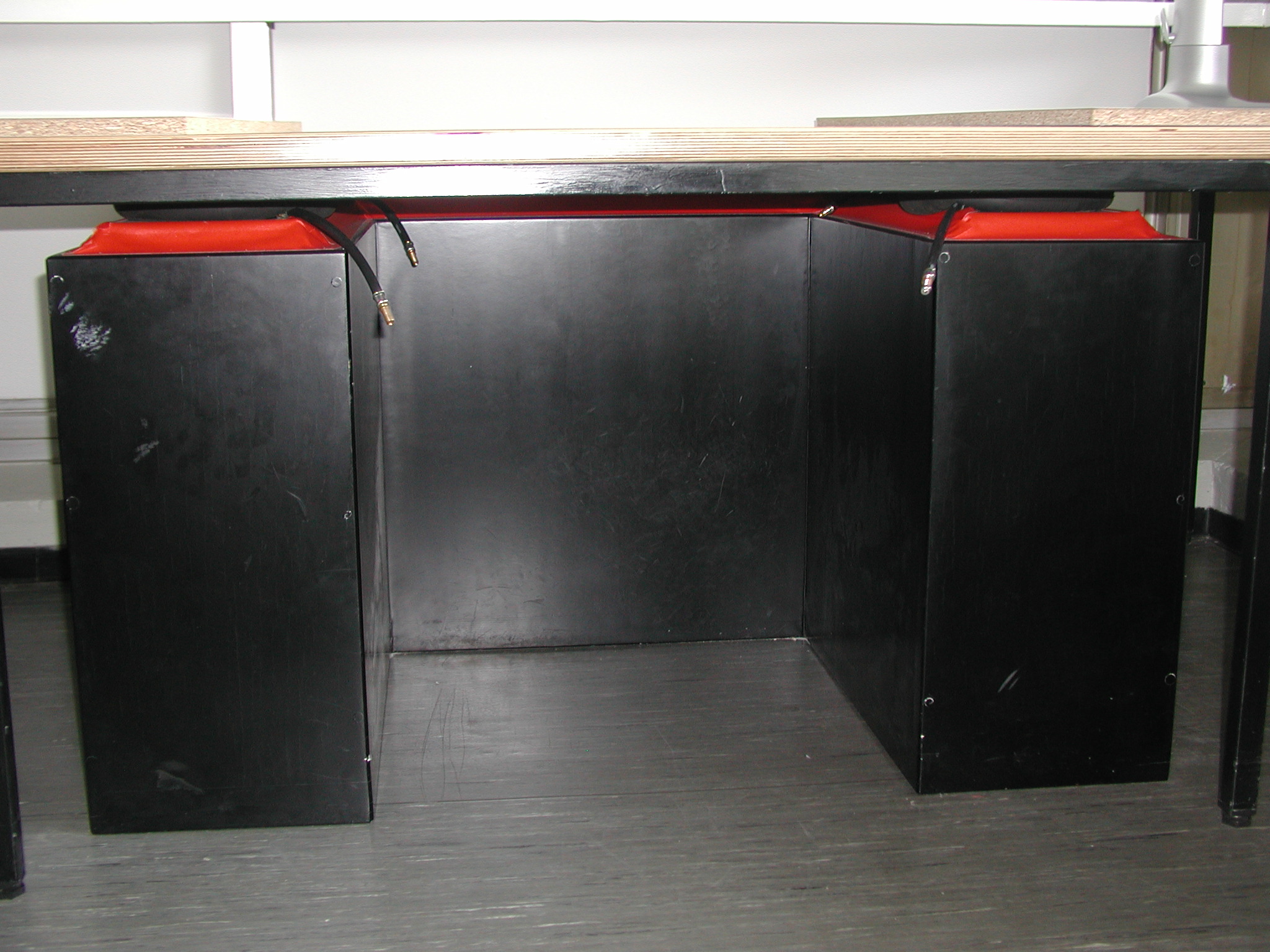
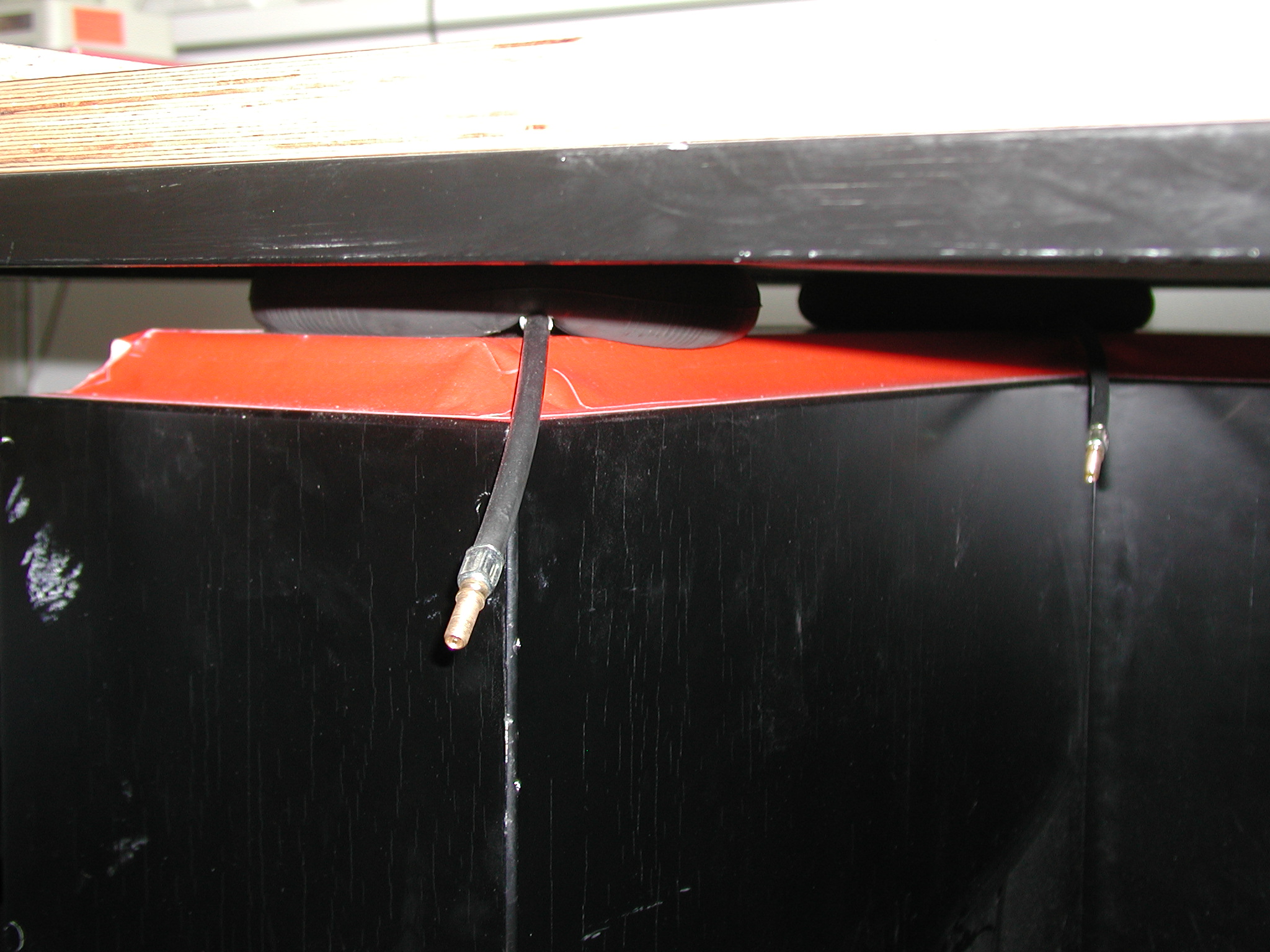
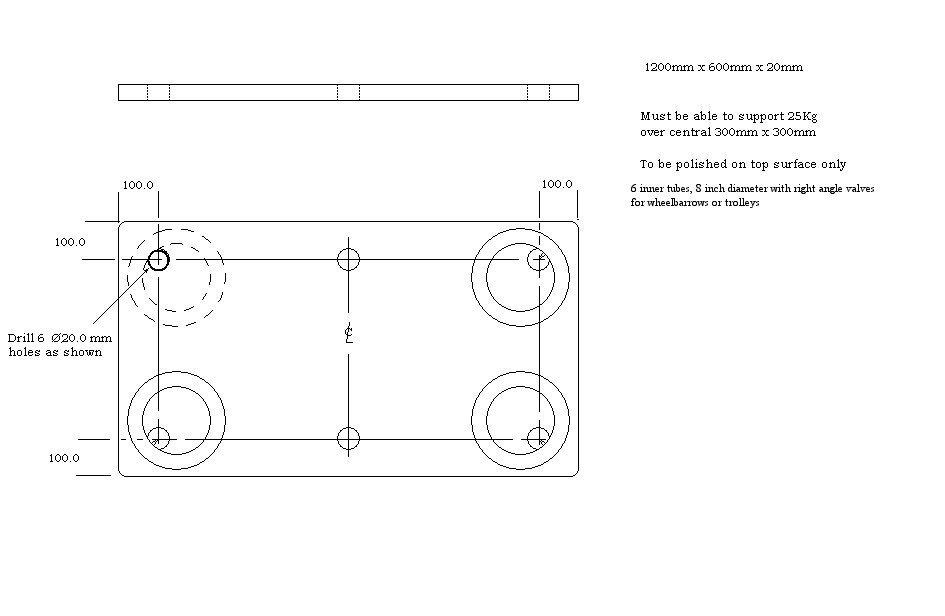
Halcyon brochure (PDF, 848 KB)A highly effective table designed and built by Dr. Ulrich Glasmacher at Heidelberg University, who has generously shared his complete drawings with the FTD community. (Translated from German by M. Krochmal — any mistakes are his.)
See plans & photosA slab of granite on partly inflated wheelbarrow inner tubes. Genuinely. It works because a substantial mass on a sufficiently elastic base stays still by sheer inertia — at a fraction of commercial prices.
How to build itComplete dimensioned drawings and photographs, available for the benefit of the FTD community. High-resolution versions are in the download library.